Purpose-designed insertion tool passes the test
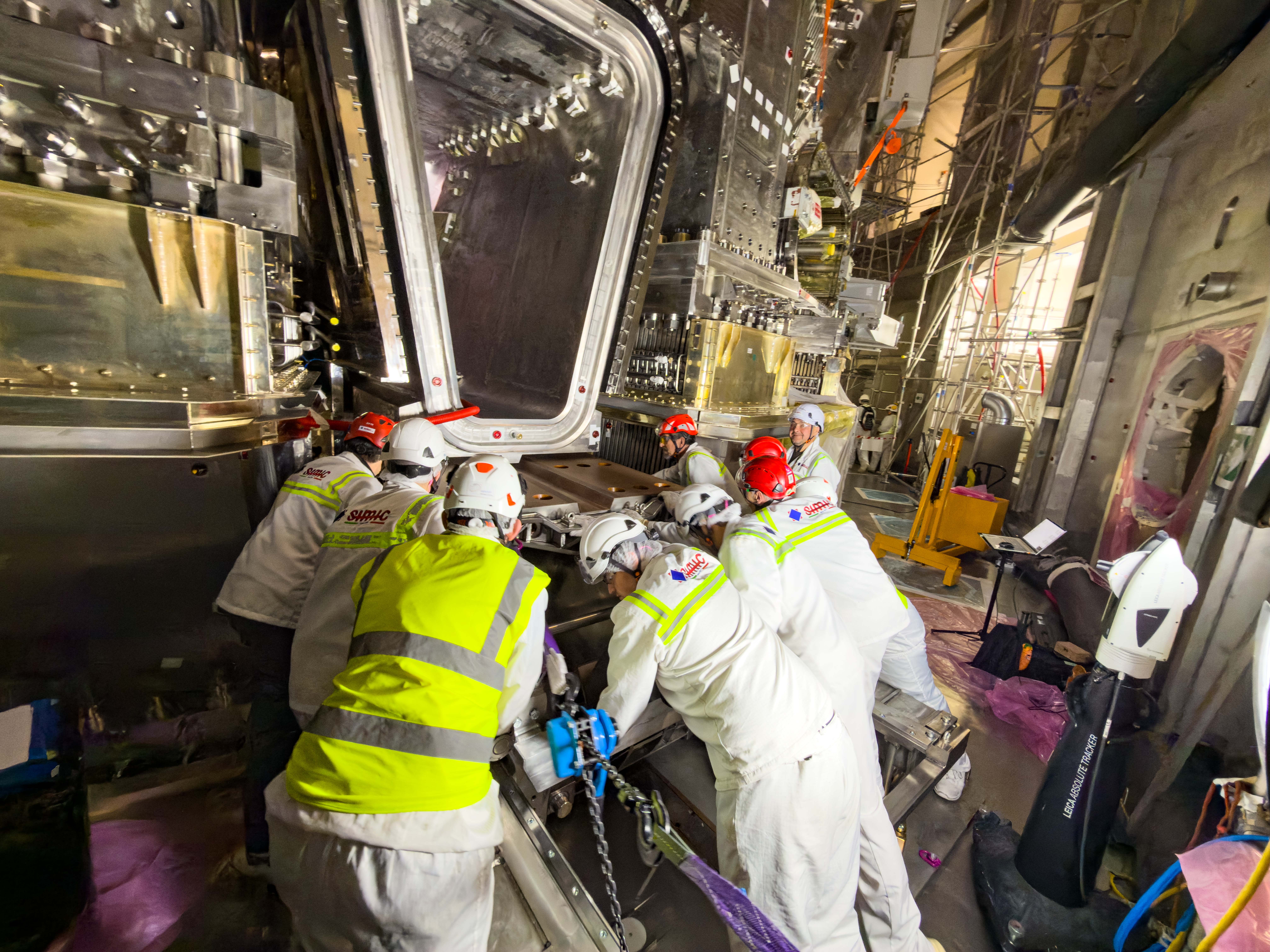
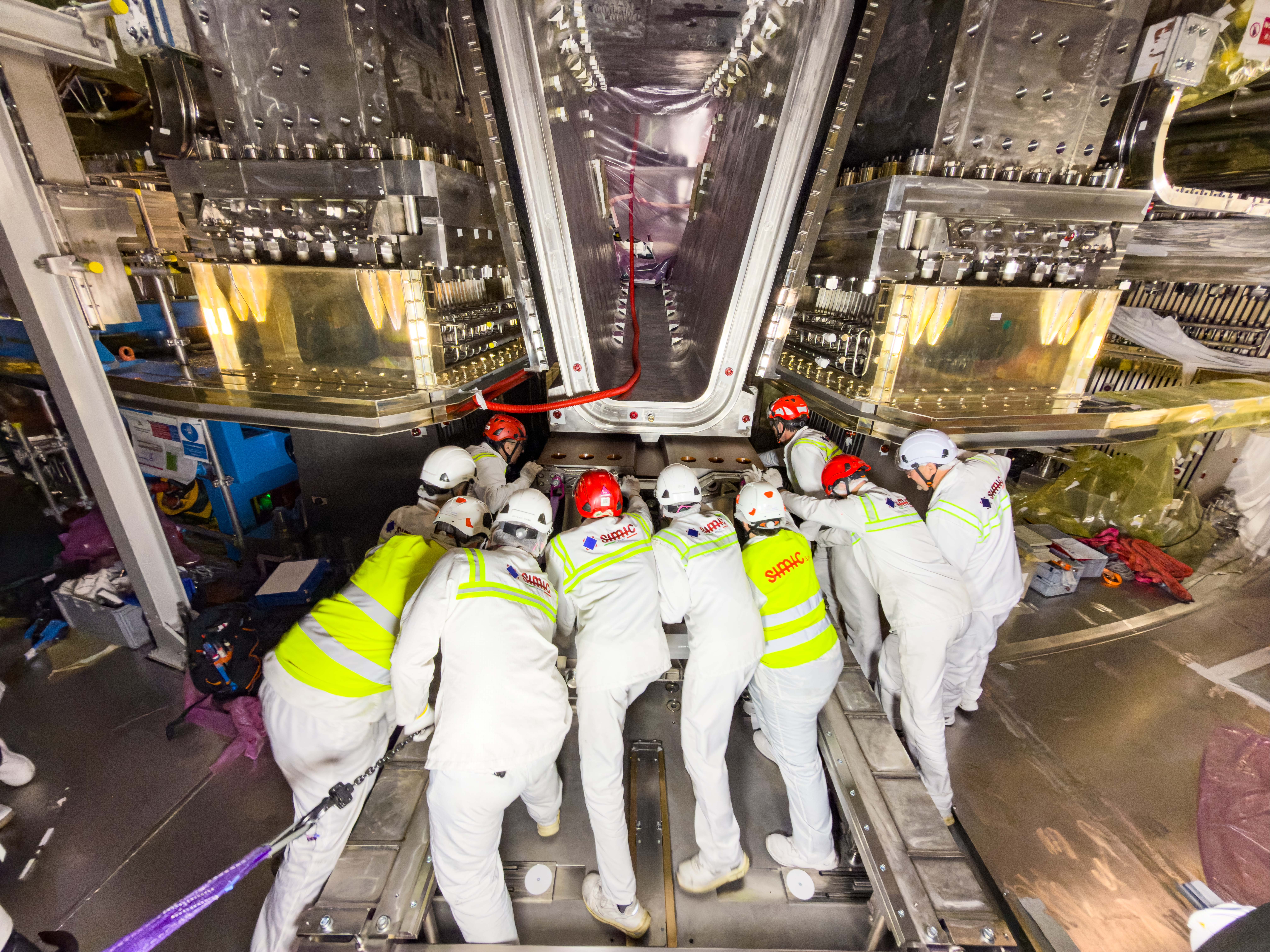
With a pioneering manoeuvre resembling a mine cart being squeezed into the narrowest of tunnels, assembly teams have successfully positioned a vacuum vessel gravity support under a sector module in the tokamak pit. This complex process—carried out to within tolerances of just 0.75 mm—was part of the ongoing work to install supports for the plasma chamber so it can handle the massive loads and forces it will undergo during plasma operations.
The nine vacuum vessel sectors that make up ITER’s steel plasma chamber will each be supported by a specialized component known as a vacuum vessel gravity support. These supports will carry the vertical load of the sectors (8,500 tonnes in total, including components installed inside the vessel) and, thanks to an intricate hinge system, accommodate radial movement caused by thermal expansion during plasma experiments.
The vacuum vessel gravity supports are being placed in the tokamak pit in two different ways. If the dedicated support is ready before the sector module is inserted into the pit, then the process is straightforward: it is lowered into the pit and secured in place before the sector module is landed on top. This was the case with sector modules #5 and #8.
However, as part of the accelerated assembly schedule, the first two sector modules—#6 and #7—were installed in the pit ahead of their gravity supports. This meant that ITER’s engineering and design teams were required to develop a novel process for sliding the supports into place under the sectors.
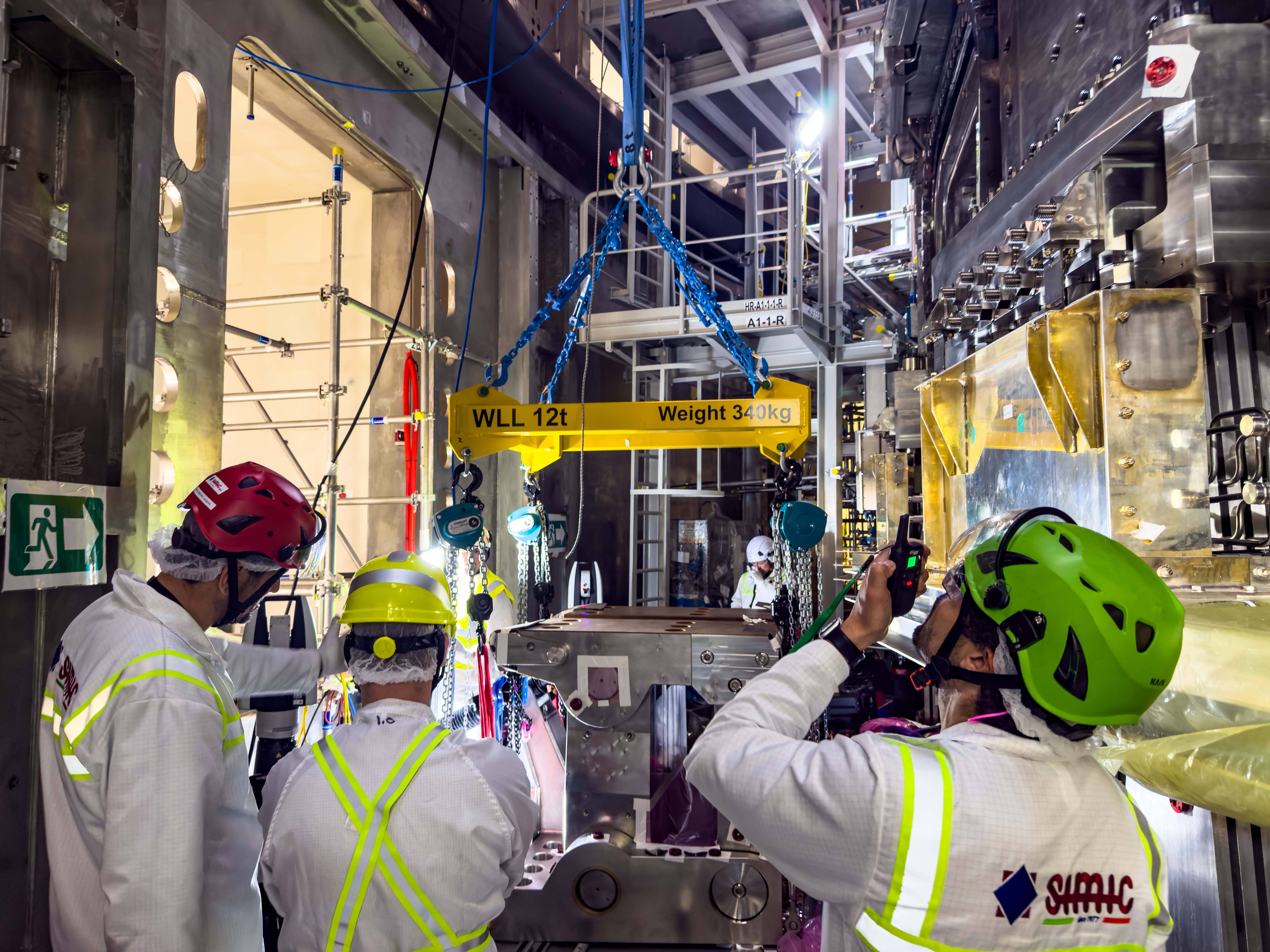
“The teams showed creativity and flexibility in finding the solution to this assembly challenge that was possible to execute in the constrained environment of the tokamak pit,” says Sebastien Koczorowski, the deputy head of the ITER Machine Assembly Program. “This successful operation represents a big accomplishment that maintains the pace of assembly.”
The first challenge facing the teams was to design a tool that could both fit into the tight space of the tokamak pit and successfully slide the 11-tonne vacuum vessel gravity support under sectors #6 and #7. The result was an insertion and alignment tool that transfers the vacuum vessel gravity support into position along a short section of rails.
Designers from ITER and contractor Simic S.p.A. (Italy) began developing the tool in 2025 and the plans were finalized in January 2026. Then, Simic worked three shifts a day, seven days a week to produce the tool and have it shipped to ITER by early March.
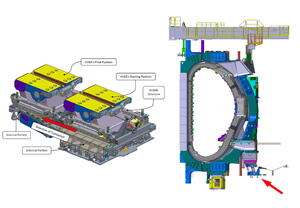
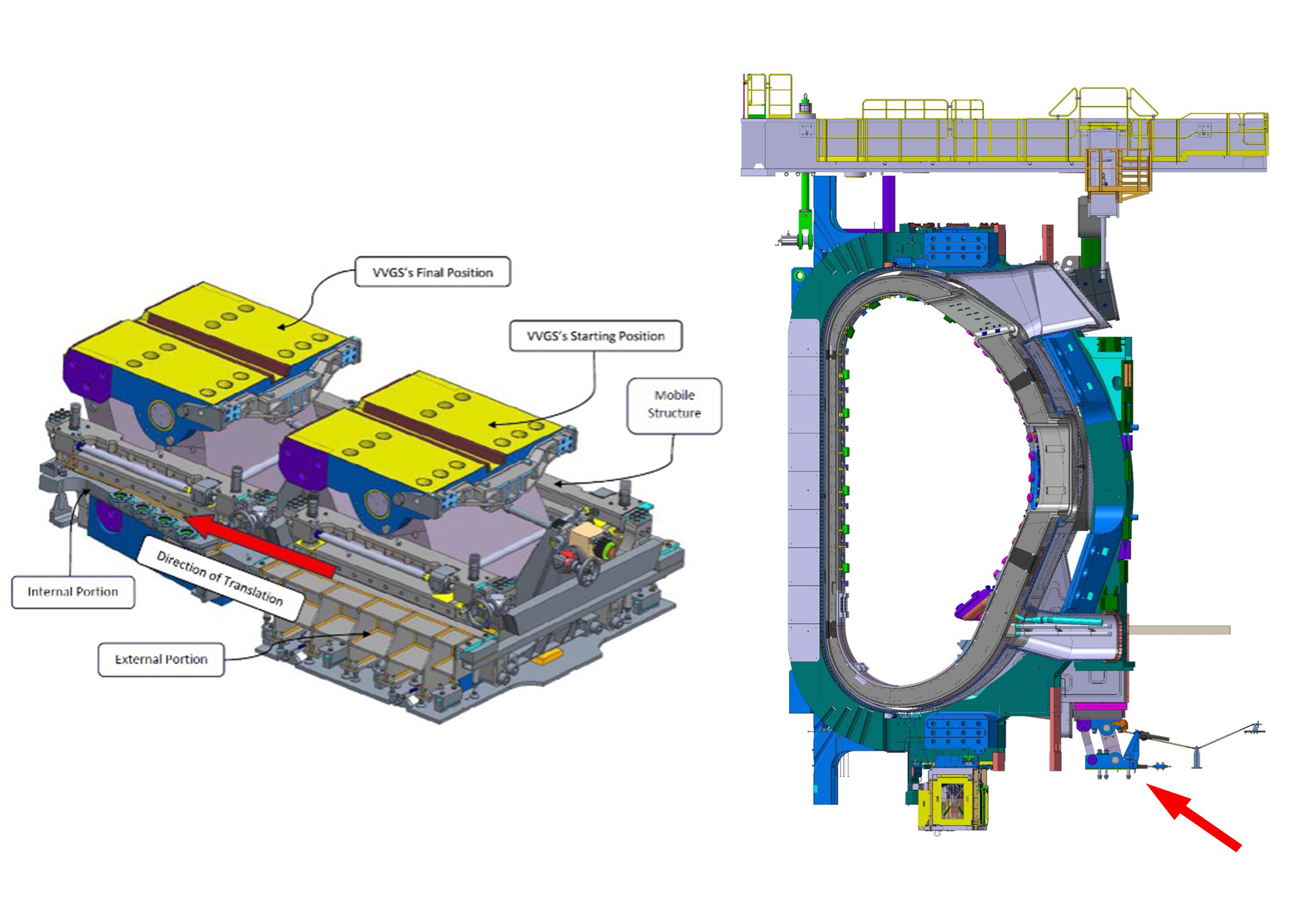
“It was a full team effort to manufacture the tool on schedule,” says Philippe Piluso, the construction manager at SIMIC who also oversaw the first installation operation at ITER. “It was an intense period, but extraordinary circumstances require extraordinary efforts.”
The installation of the vacuum vessel gravity support under sector module #6 required both technological precision and brute strength. On the technological side, the hinge of the support was adjusted so it took up as little vertical space as possible to fit under the component and then advanced metrology was used to identify its final position with a margin of only 0.75 mm.
“Incredible precision is required because if the gravity support isn’t in exactly the right place, the weight of the vacuum vessel won’t be evenly distributed and this could cause imbalances that could affect machine operations,” explains Simon Neumueller, the ITER engineer helping to manage the vacuum vessel gravity support project.
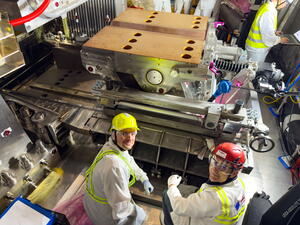
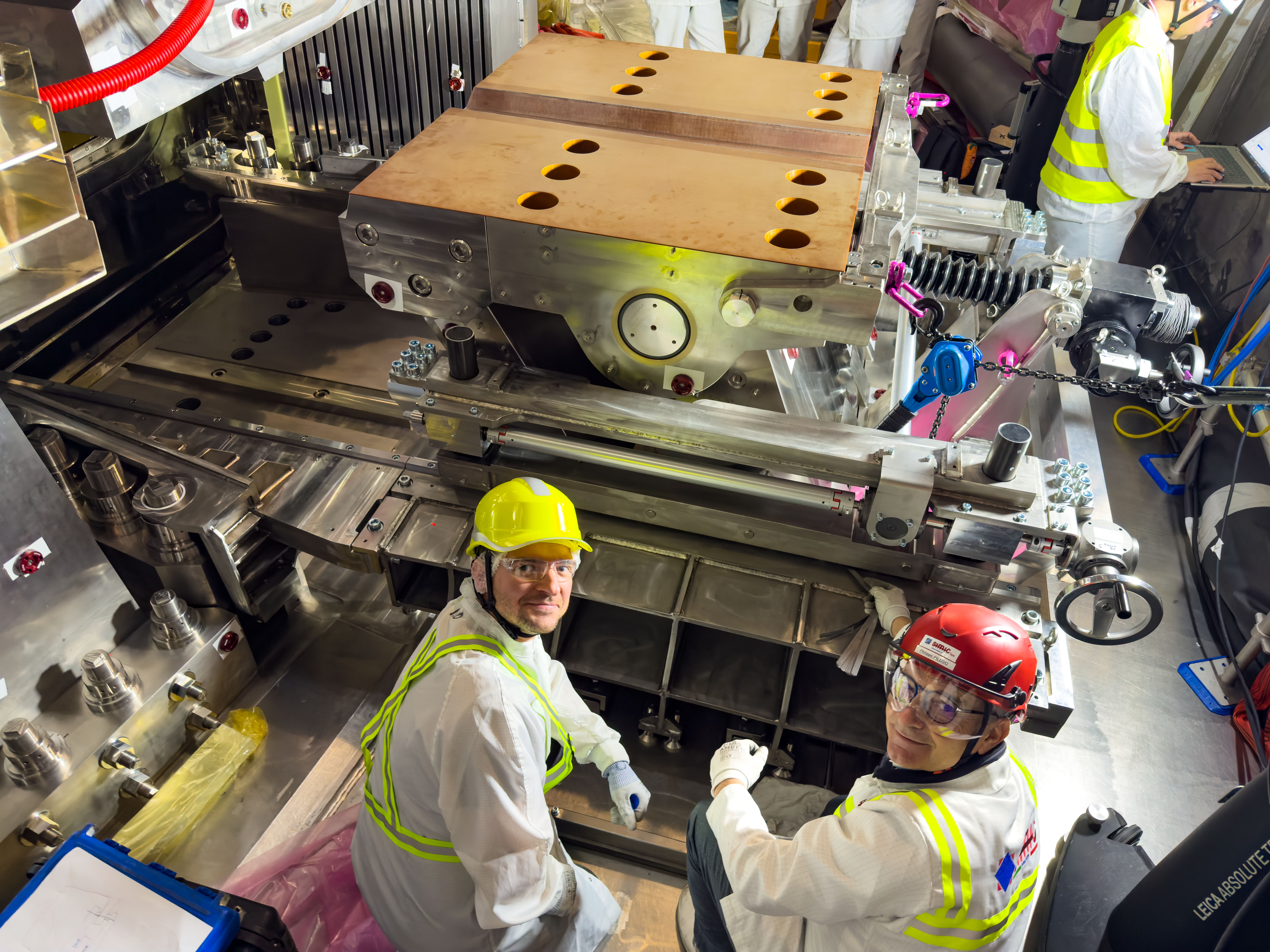
On the “brute strength” side, once the vacuum vessel gravity support was on the insertion tool, a team of 10 Simic workers pushed the 11-tonne component into place using good old-fashioned muscle power.
The vacuum vessel gravity support reached its final position on Friday 13 March, arriving in place with a tolerance of merely 0.25 mm compared to its target position. Now, stainless steel shims will be placed on top of the support and it will be attached to the lower port stub extension of sector module #6. Once this is done, the process will begin to detach the sector module from the radial beam that is currently supporting its weight and transfer the load to the vacuum vessel gravity support.
With one support now under sector module #6, the specialized tool will be moved to sector module #7 to repeat the same operation.