
Rule the ripple
16 Apr 2010
-
Sabina Griffith
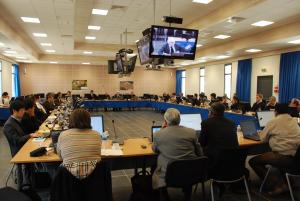
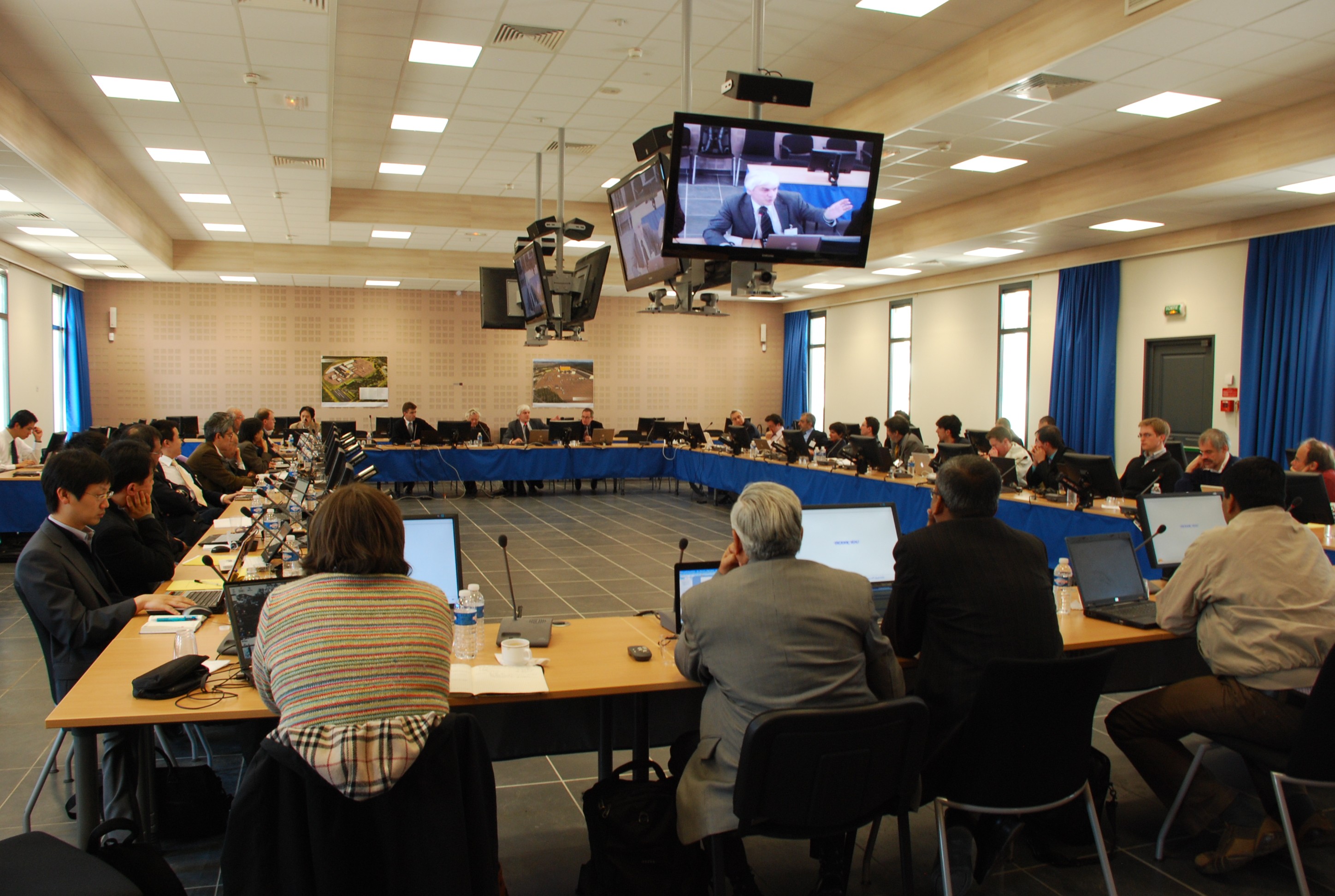
Fusion scientists from all around the world discussed the possible impact of the TBMs on plasma performance in ITER.
Ripples are not exactly a fusion scientist's best friend. These sinusoidal perturbations can influence plasma confinement and thus performance and power gain. A "ripple" in a fusion plasma can be compared to a ripple on the surface of water. When you stick your finger into the water, waves spread in a radial direction. In the ITER configuration, the "finger" can be a toroidal field coil, or a Test Blanket Module (TBM).
This week, a group of fusion scientists from all around the world met to discuss the possible impact of the TBMs on plasma performance in ITER. The main question addressed pertained to the ferromagnetic steel used for the TBMs and its potential influence on plasma confinement and performance. From simulations and experiments run on tokamaks such as JET, Alcator C-Mod, DIII-D or JT60-U it has become clear that ripples have a negative influence on H-mode confinement, but it is not yet clear what level of ripples is acceptable for ITER.
"The bottom line is that they are not likely to degrade performance in the early low-performance phase of ITER operation," explains Joe Snipes, ITER's Senior Scientific Officer for Integrated Scenarios. "However, they are likely, with the present designs, to degrade performance in the later high-performance phase. Unfortunately, the uncertainties in the extrapolation of the present results to ITER make it very difficult to quantify this result accurately enough to predict exactly how much ferromagnetic material near the plasma would be acceptable in the TBMs."
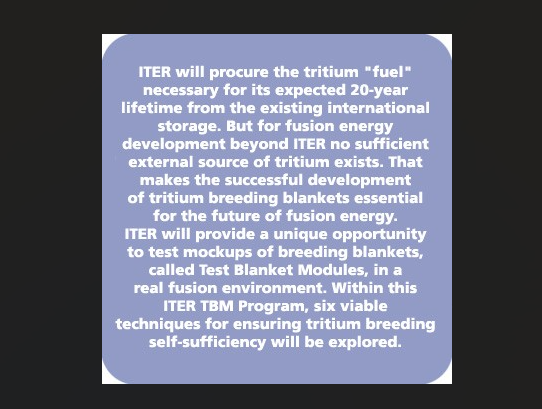
In the course of this week's two-and-a-half day endeavour, the team of international experts screened the existing database and discussed a variety of possible countermeasures including a reduction of the amount of ferritic steel used in the modules, insertion of correction coils or a recess of the TBMs away from the plasma. "It is quite a rare occasion to have physicists and engineers working and discussing together to reach a common goal," explains the meeting organizer, Luciano Giancarli, Chief Technical Officer in charge of the TBM Program in ITER. "The goal is to permit the performance of the most valuable TBM Program in ITER."
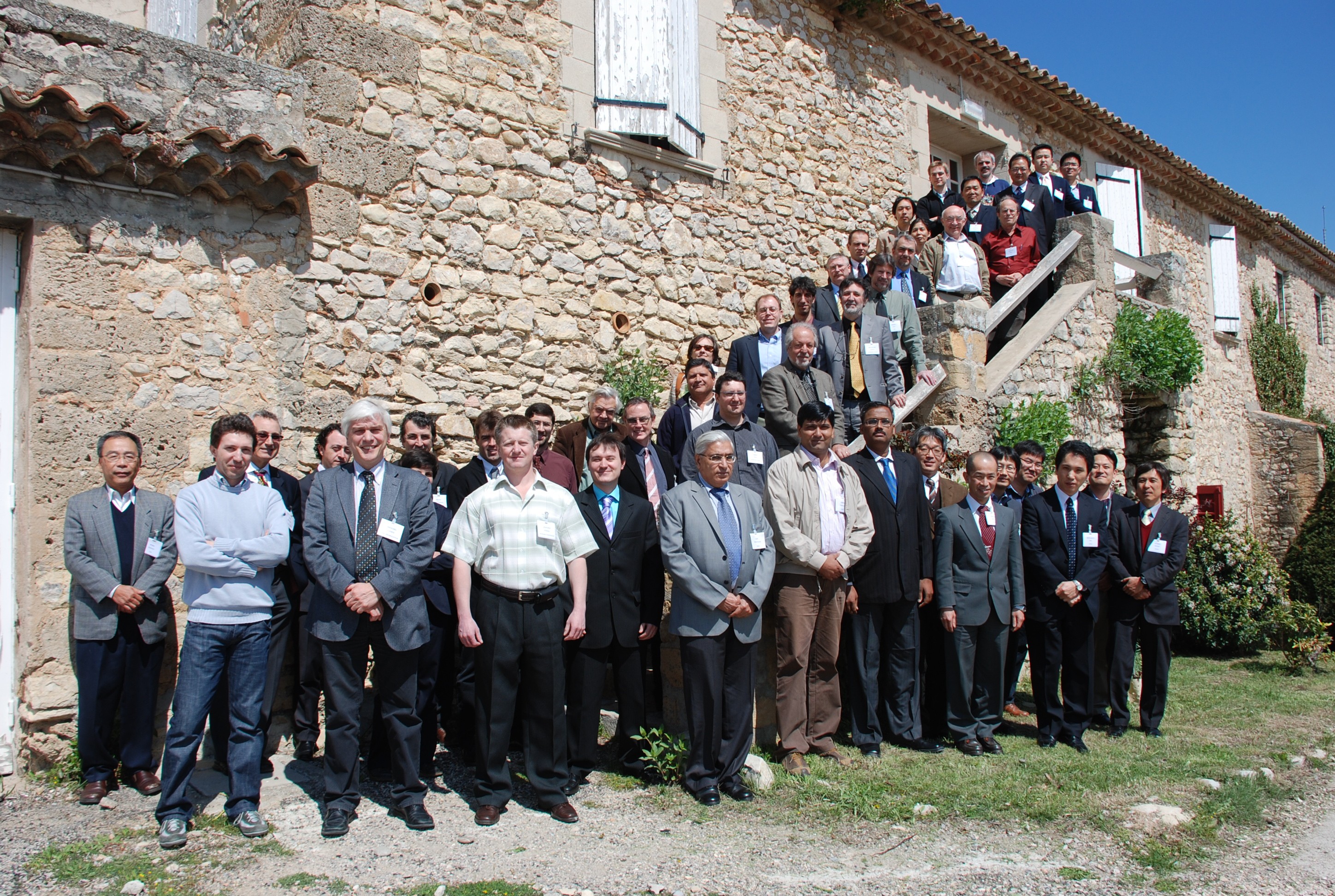
A smile for fusion history: the group posing in front of the Chateau de Cadarache.
The decision was made to continue with the present designs with an understanding that the TBM teams should try their best to minimize the amount of ferromagnetic material while still maintaining the TBM mission goals. In the meanwhile, physicists will propose new experiments and attempt to refine the theoretical models to better estimate the amount of ripple-producing ferromagnetic material that is acceptable without degrading ITER performance too much. "Knowing exactly how much is too much can probably only be determined with high performance deuterium or deuterium-tritium experiments on ITER," says Joe Snipes.
"The ripples induced by the TBMs fall in the range where there are large uncertainties on the ripples effects and, therefore, further studies and experiments have been defined in order to reach clearer understanding in the next few years," Luciano Giancarli adds. "In the meantime, TBM designs can keep the present ferromagnetic mass provided that an effort will be made to reduce them before 2013, when the TBM conceptual design review is planned. In any case, the corresponding risks and tendencies are now much better identified and both physicists and engineers are well informed."