
Magnet feeders
On their way from Hefei
11 May 2020
The many elements of the magnet feeder system are arriving on site in carefully coordinated sequences aligned with global machine assembly needs. Last month, two large components—in-cryostat feeders that must be installed under the machine—left the Hefei facility of the Institute of Plasma Physics (ASIPP). They will arrive in July.
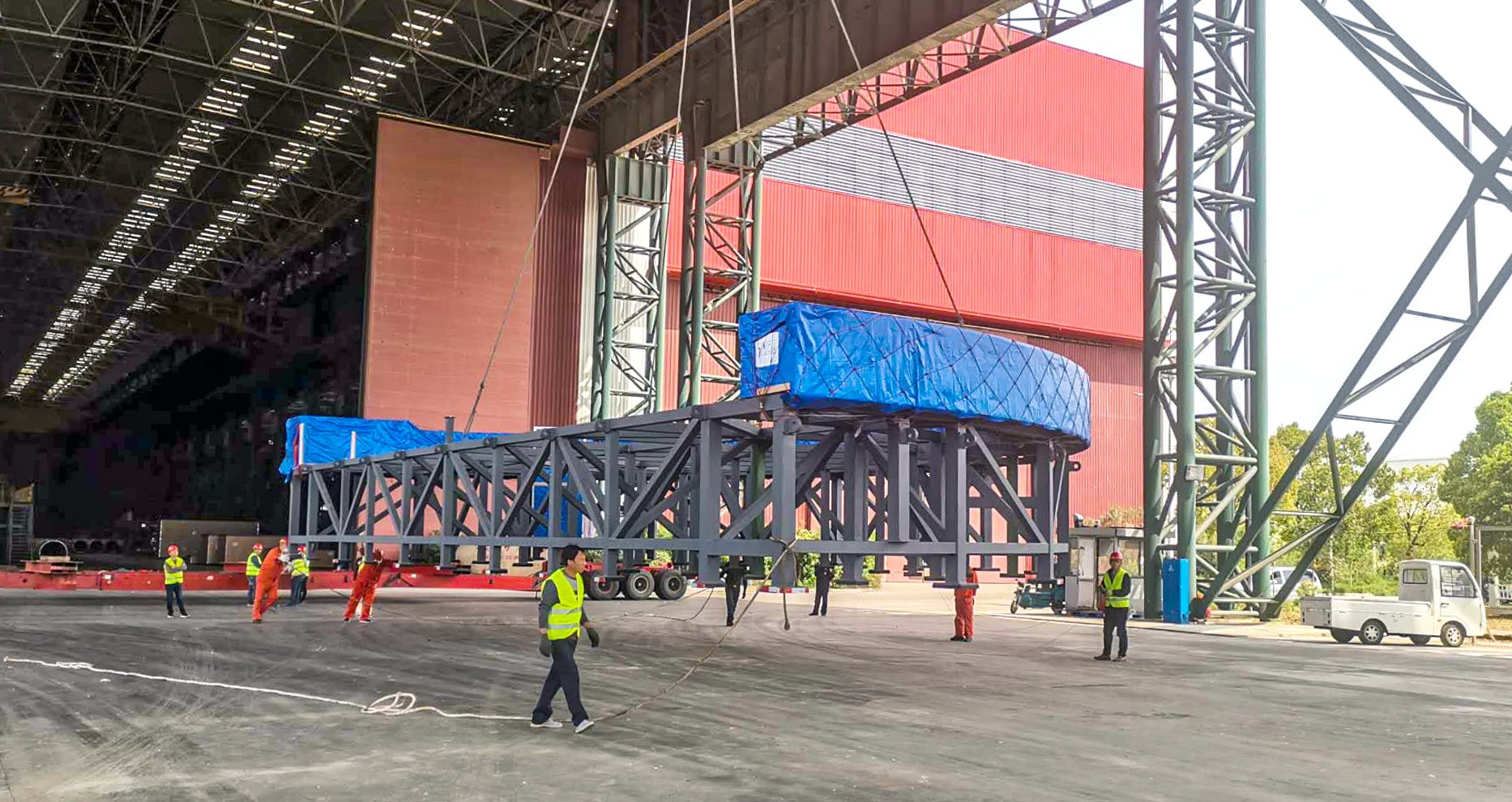
The Chinese Domestic Agency is procuring 1,600 tonnes of equipment for the ITER magnet feeders from the Institute of Plasma Physics (ASIPP), Chinese Academy of Sciences. Two large components—in-cryostat feeders that must be installed under the machine—left the ASIPP facility on 21 April.
Each of ITER's superconducting magnets—whether one of the 18 toroidal field coils, the 6 poloidal field coils, the central solenoid (6 modules), or the 18 correction coils—must be supplied with electrical power, cryogens and instrumentation.
This is the job of 31 superconducting magnet feeders. Designed by the ITER feeder team, procured by the Chinese Domestic Agency, and manufactured at the Institute of Plasma Physics (ASIPP), the feeders travel 30 to 50 metres from the "warm" exterior environment outside the machine and cryostat in to the "cold" superconducting magnets operating at minus 270 °C. Given their size, each feeder will be delivered to ITER in three fully instrumented segments.
Coil terminal boxes, situated far from the machine, house warm-to-cold electrical transition equipment, remote control helium supply valves, and sensors for coil instrumentation). Cryostat feed-throughs pass through the concrete bioshield and into the vacuum environment of the cryostat. In-cryostat feeder segments connect directly to the coils.
Inside of each segment, are many high technology components that are needed to relay essential services to the magnets: high-temperature superconducting current leads, cryogenic fluid transport pipes, high- and low-voltage instrumentation conduits, and busbars. The work to join the segments will be carried out by trained contractors on site and closely supervised by the ITER Organization.
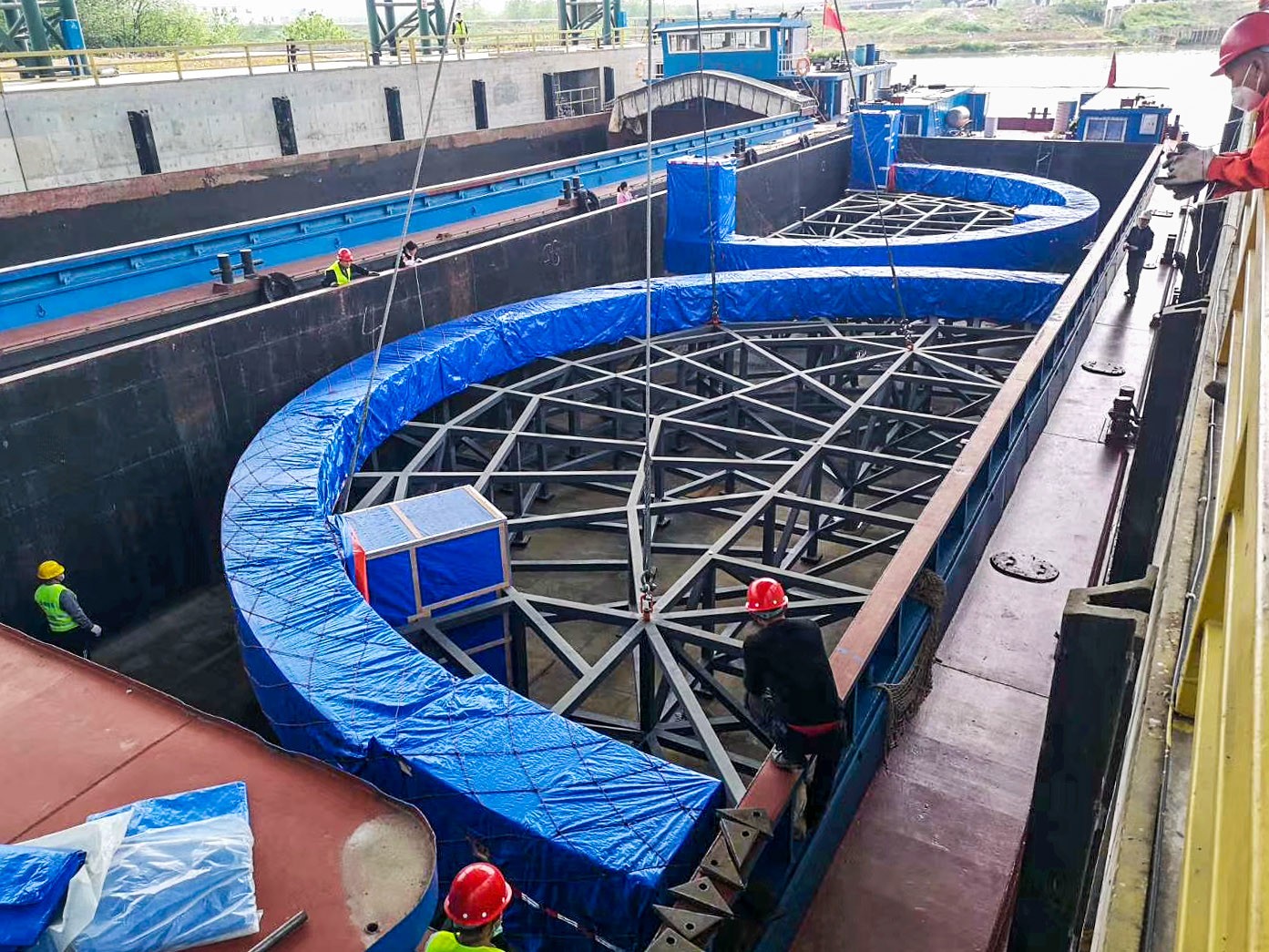
The components are on their way to Shanghai, where they will be loaded on an oceangoing vessel in June. They weigh 21 tonnes and 18 tonnes respectively and measure 16 to 19 metres in length.
On 21 April, in-cryostat feeder segments for one bottom correction coil and one side correction coil were picked up from the ASIPP facility in Hefei for transport to Shanghai. Weighing 21 tonnes and 18 tonnes respectively and measuring 16 to 19 metres in length, the components will leave China for France next month.