
Balancing the variables in the equation
26 Oct 2011
-
Osamu Motojima, ITER Director-General
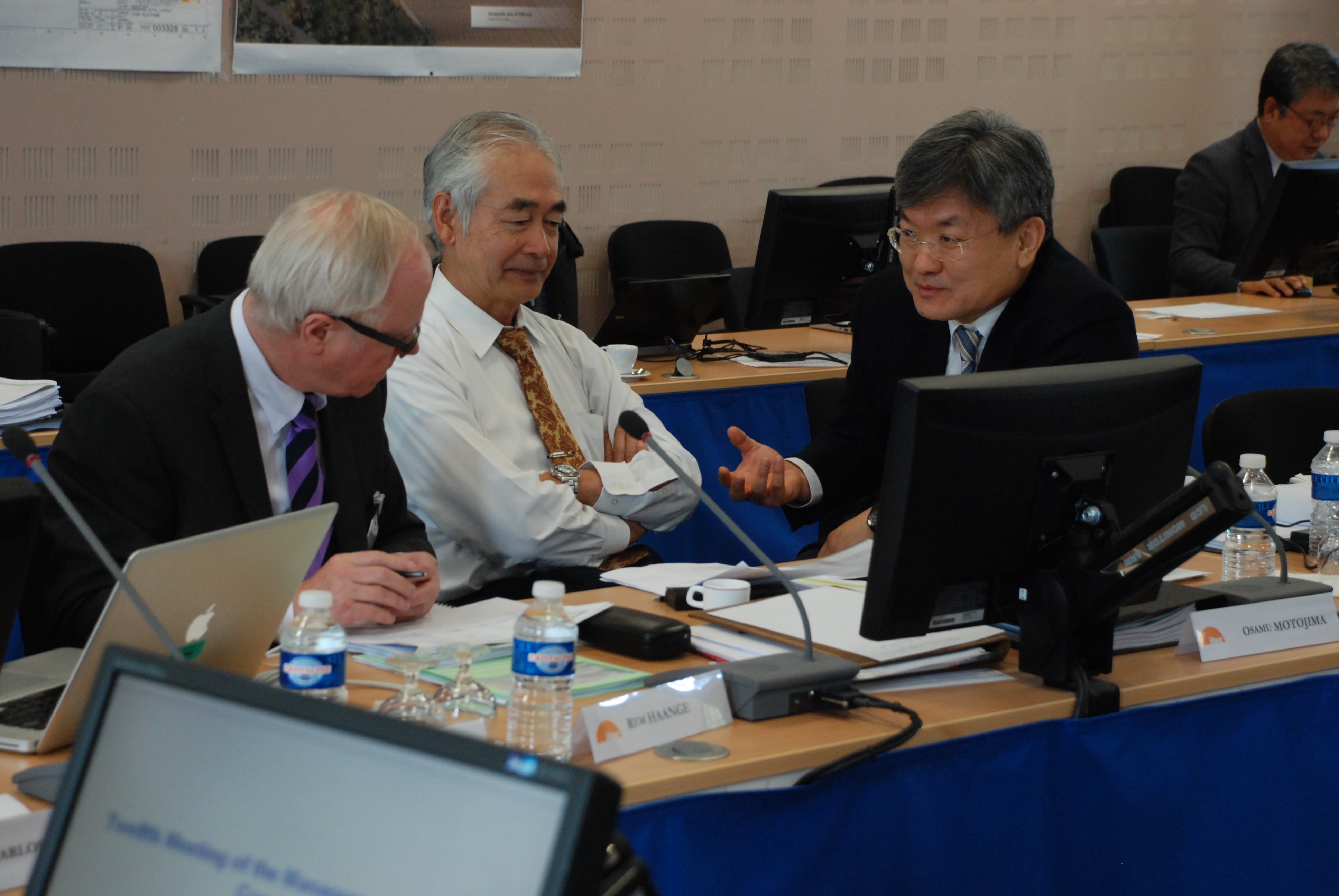
The MAC taking a break: Deputy Director-General Rem Haange, Director-General Osamu Motojima and MAC Chairman Gyung-Su Lee.
The month of October is always a busy time for the ITER Organization, as the project's two top advisory bodies—the Science and Technology Advisory Committee (STAC) and the Management Advisory Committee (MAC)—convene here in Cadarache for their semi-annual meetings. This is where the performance of the Organization is benchmarked. The Committees' appraisal of our decisions and actions is very valuable to us; over time, these advisory committee meetings have greatly helped us to evolve.
This time, the main focus of the discussions was on our strategy for addressing and mitigating potential delays, caused both by the earthquake in Japan and also the late handover (or incompleteness) of design work and delayed Procurement Arrangement signatures. In order to recover unsatisfactory schedule performance, a Special Task Group was established immediately after the last ITER Council meeting in June 2011. The Task Group, which I chair, involves representatives from the seven ITER Members on both a technical and political level. Since its implementation we have had six meetings.
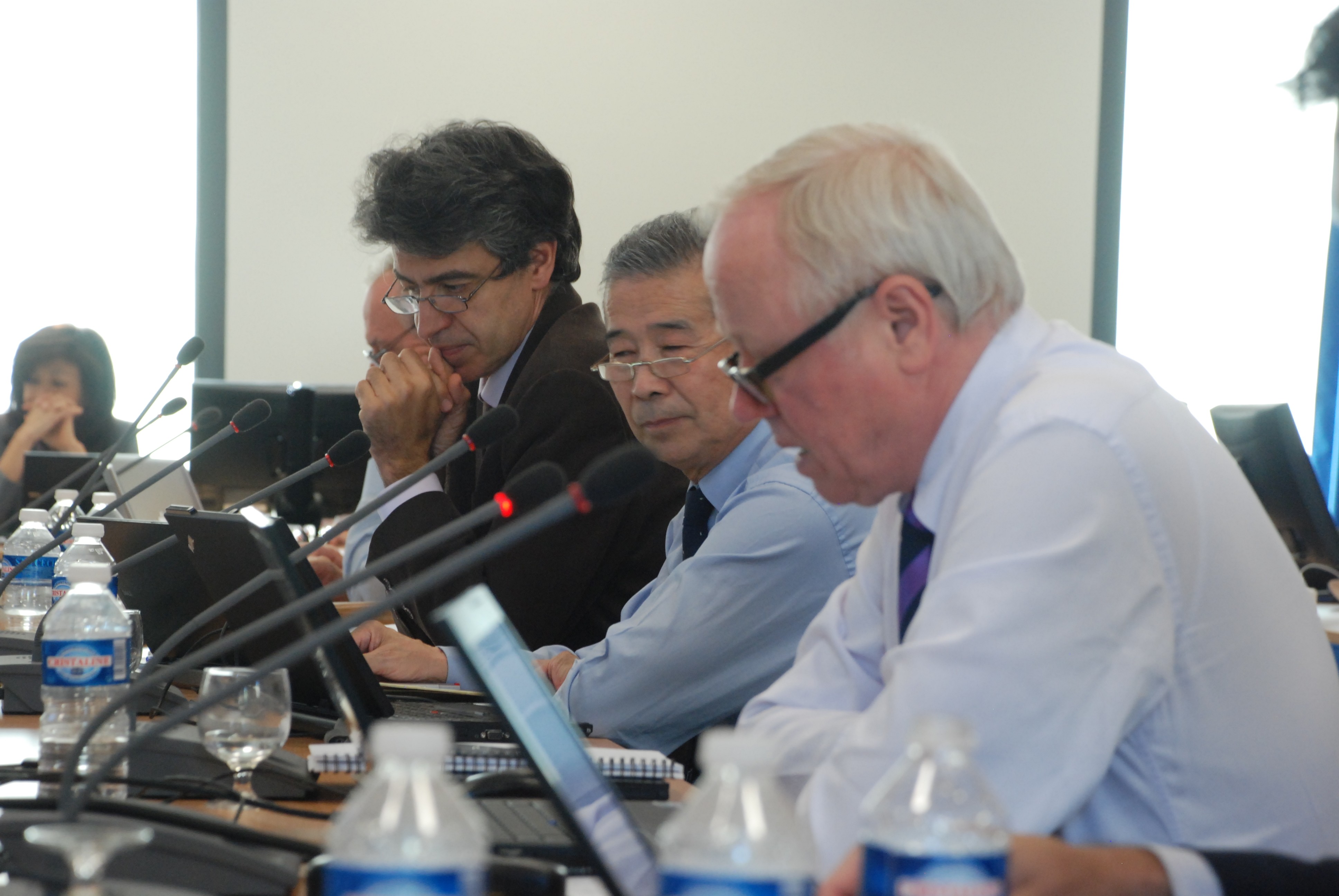
STAC Vice-Chair Joaquin Sanchez and STAC Chair Yuanxi Wan listening to Rem Haange's report.
The result of the work done by this Task Group is that we now have a design completion process which is substantially different from our previous processes. We have also considerably simplified our planning and scheduling strategy in order to facilitate more rapid progress.
One of the issues discussed at STAC was the central solenoid conductor. Latest test results showed that the conductor's performance has significantly improved with respect to the tests carried out at the end of 2010 (Newsline 173) but still does not fully meet the specification. Our proposal to use this conductor in the lower central solenoid module; for this module, the expected loads are low enough to assure the lifetime of that coil.
Regarding the cold testing of the toroidal field coils, the STAC will recommend to the ITER Council that all coils be tested at 77 Kelvin. In Japan, where an ongoing risk analysis may demonstrate sufficient confidence in the performance of the toroidal field coils without cold testing, a different strategy may be followed. MAC has therefore asked me to review the ITER Organization's strategy and to work with the Japanese Domestic Agency to achieve a plan that assures sufficient confidence.
It genuinely falls within the responsibility of MAC to balance any technical risks against cost, schedule and funding risks. But let's be reminded that one variable in this equation is absolutely inflexible: We must not overstep the construction cost ceiling requested by the ITER Council. To do so would necessitate a tremendous effort to assure continued funding for the ITER Project.
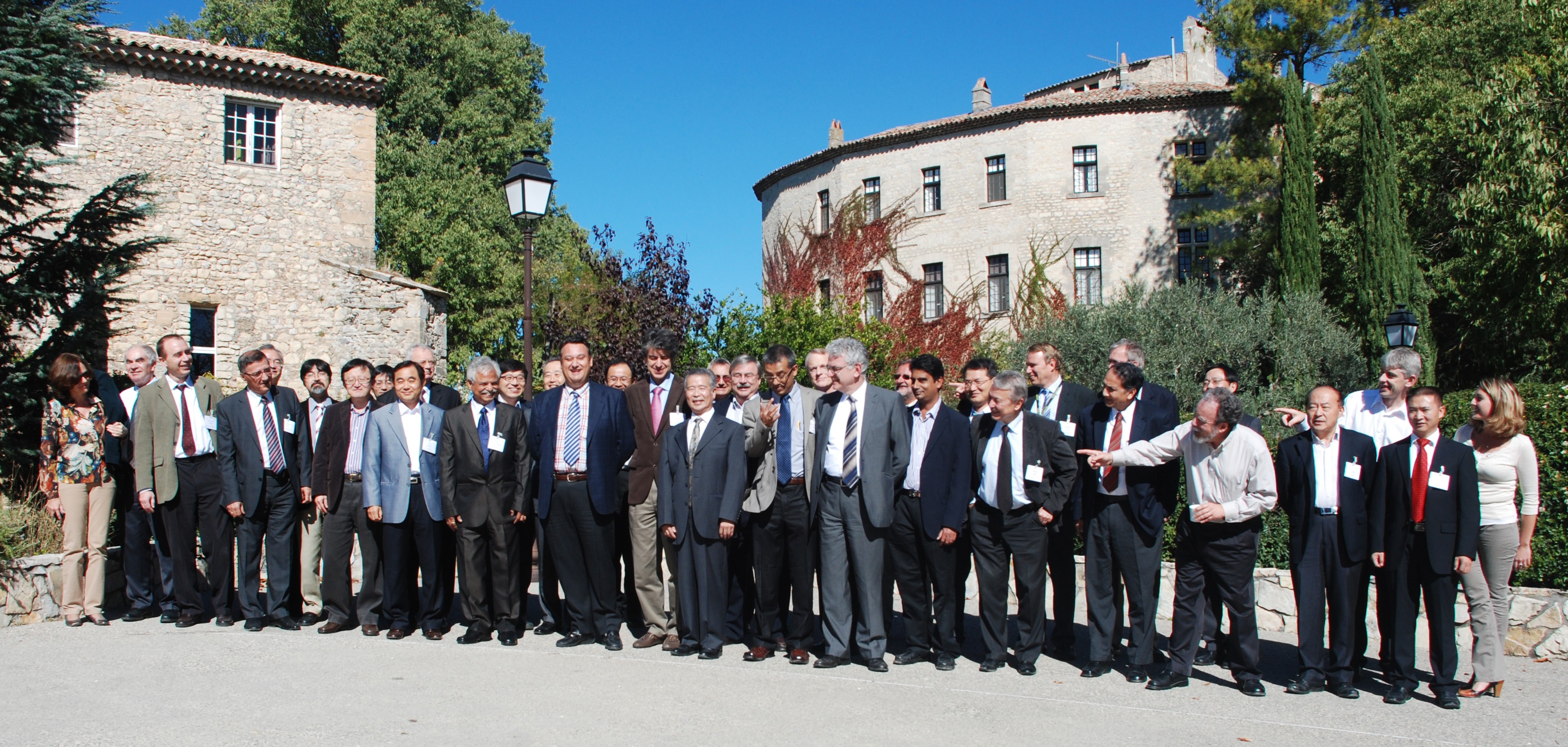
Time to say goodbye to Chairman Yuanxi Wan (centre) who stepped down after five years of leading the STAC.
With the present knowledge of the project's costs and construction schedule, it is evident that to meet the cost goal it will be necessary to defer a number of subsystems and components to the Operation Phase, and to pay for those items by a reduction in other operational costs. The only item of sufficient value to accomplish a sufficient reduction in the operations budget in the early years of the operation phase is the second divertor. In short, we can no longer afford to pursue two different divertor designs.
The plan is thus to begin operations with a tungsten divertor from the start, instead of a carbon-fiber divertor for the beginning of operations and a tungsten divertor for deuterium-tritium operation in 2027.
Even though both I and the experts within the ITER Organization are confident that the risks associated with a tungsten divertor right from the commission phase are manageable, we have not reached an unanimous position among the ITER Members on this issue. It may be that we have to postpone this decision and continue work on both technologies to resolve the remaining technical problems and risks.
Other deferrals include some of the heating systems, specific diagnostics, hot cell tools and tritium plant systems. In total, these deferrals amount to more than EUR 200 million.
These important issues will next be discussed at the ninth ITER Council on 17-18 November.