
|
|
|
|
|
|
|

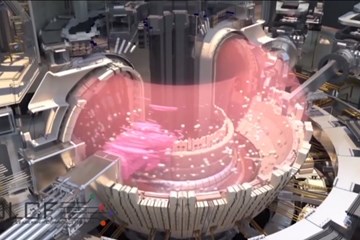
During the last few weeks, there have been several important developments for the ITER project. Two related to the tokamak are: the Vacuum Vessel Schedule Forum held on 20 January as part of the Technical Advisory Group (TAG) meeting; and the Blanket Conceptual Design Review (CDR) which was completed this week. Both of these were part of important steps to move the project forward.
The main objective of the Vacuum Vessel Schedule Forum was to assess industrial capability to deliver the vacuum vessel sectors at minimum time and cost. Past experience was reviewed, including R&D from the ITER Engineering Design Activities to the present. Current plans for the Korean sectors were examined, and European companies discussed their ideas on how the schedule could be compressed. The meeting was very constructive and will help finalize assessments on the technical feasibility of an earlier date for First Plasma. Following this meeting and other intense discussions, the vacuum vessel schedule has been brought in line with the requirements regarding this improved schedule.
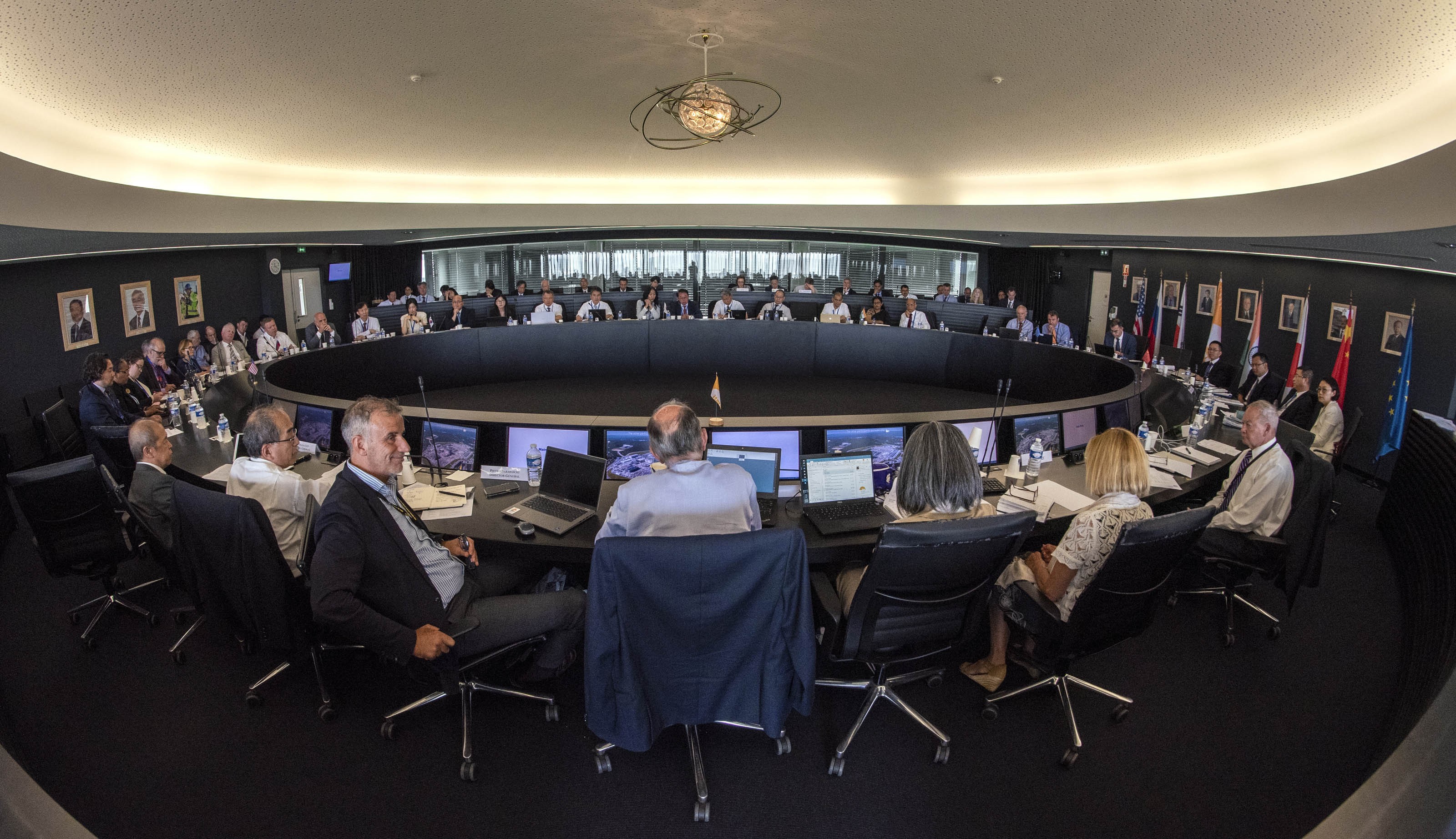
The Blanket CDR was the first formal review of the ITER Blanket and had been eagerly awaited by many around the world. Over 80 people attended — an understandable number since six of the seven ITER Members are involved with the procurement of this critical plasma-facing system. The review was very thorough and covered the blanket and first wall requirements, designs, analyses, fabrication, assembly, remote handling, shielding, interfaces, etc.
The design review Committee and Chair were favourably impressed by the quality of the work accomplished, and specifically noted that it was clear this had been a team effort involving both the ITER Organization and the Domestic Agencies working together within the Blanket Integrated Project Team. The Committee found that the current design is sound and headed in the correct direction. There were no surprises during the review (ie: unknown issues) but the comments made by the committee will help us focus our efforts as we move forward with the design. The results of this review confirm that there is a sound basis for this complex design to move forward.
|
|
|
  Work will begin this year on excavation for the Tokamak Complex and construction of the first buildings. The ITER platform is ready; perfectly flat, it measures 400 x 1000 metres. Credit AIF VDC.
  Work has ended on the first phase of the International School of Manosque. In October, 2009, 150 elementary school students moved into their new quarters. Photo: ISM
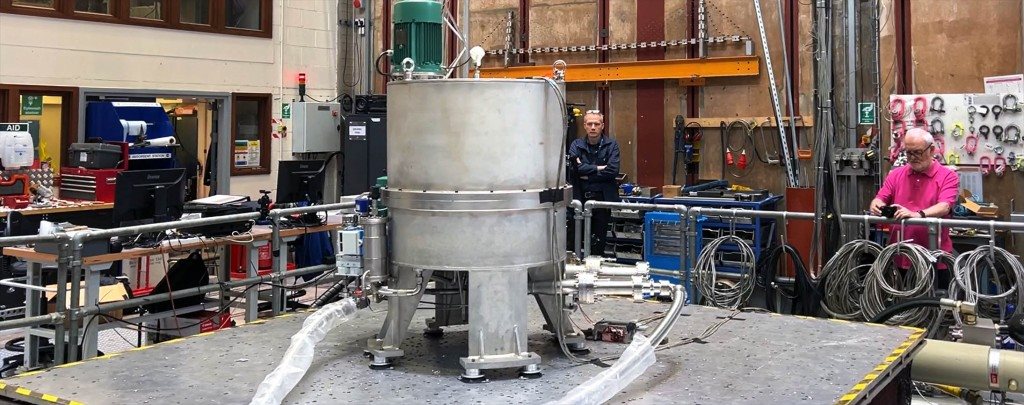
  A prototype cryogenic vacuum pump is inspected at the Karlsruhe Institute of Technology, Germany. Photo: Peter Ginter
  Employees manipulate a length of stainless steel cable jacket at ASIPP, Institute of Plasma Physics, in Hefei, China. This facility was designed to handle 900 metre lengths of superconducting cable for ITER's magnet system. Photo: Peter Ginter
  ITER's cryopanels are under development at the Karlsruhe Institute of Technology. Researchers have chosen unique coconut-shell charcoal to coat the panels for its ability to 'adsorb' - or attract and retain - waste gases. Photo: Peter Ginter
  The roadworks along the 106 kilometre ITER Itinerary are 90% complete. Here in Jouques, cranes work to remove a 40 year old bridge, following the erection of a new, reinforced structure. Photo: La Provence
|
|
|
|
|
|
|
|
|